
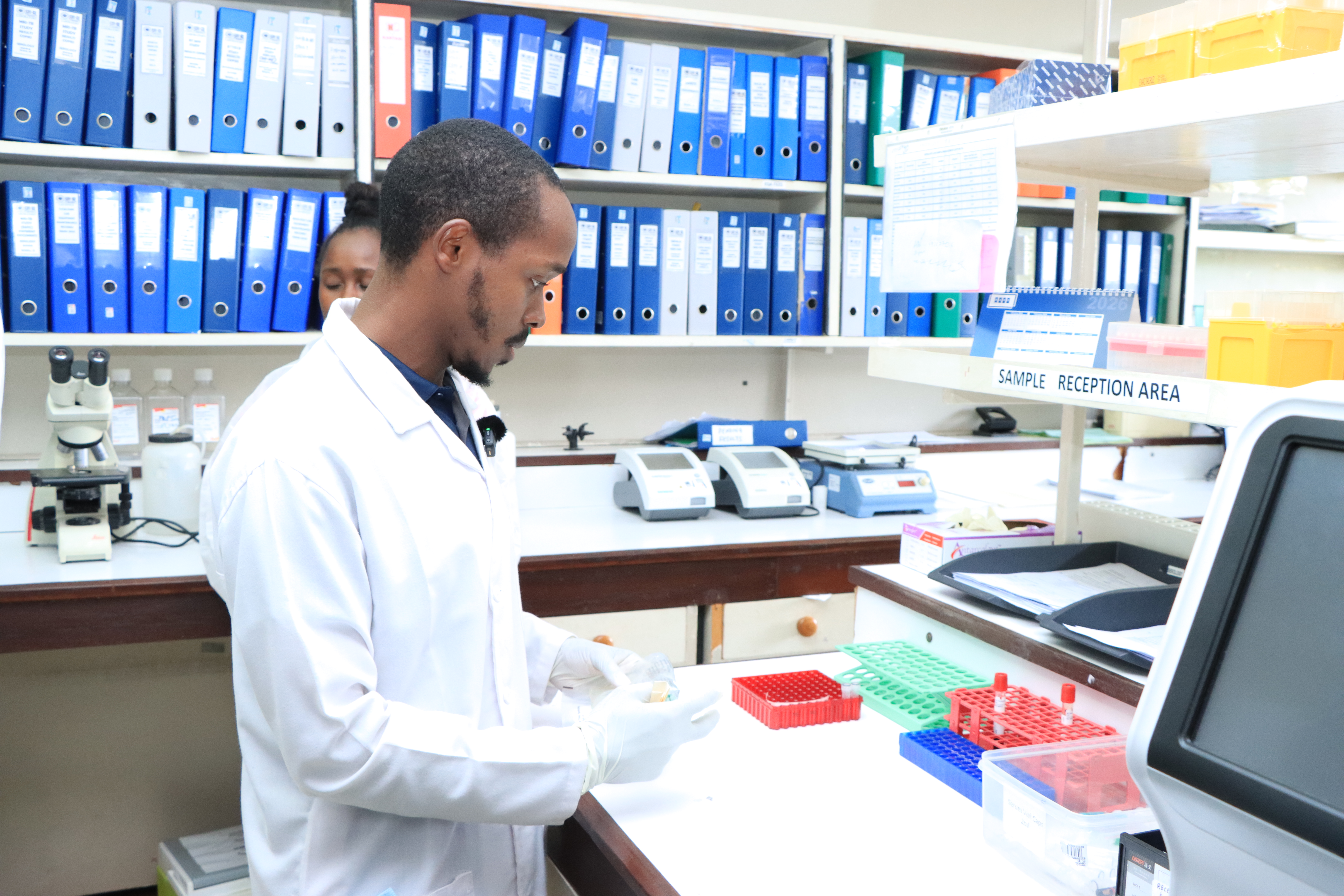
KAVI’s lab technicians demonstrating the testing process.
With the increase of cancer diagnosis in the country, there have been calls for the general public to increase of uptake of screenings and vaccination to combat cancer.
According to University of Nairobi Institute for Tropical and Infectious Diseases (UNITID) Director Prof. Julius Oyugi, people should rethink the norms and myths around cancer and the public should be informed about the genetic and viral disease more to increase uptake of screenings and vaccination to ensure early detection, diagnosis and treatment to combat the disease.
Prof. Oyugi stated that there have been many myths surrounding cancer that have fostered ignorance of the public and this has been detrimental to the public’s resolve to learn about the deadly disease and seek preventive measures.
“For a few years people thought that cancer was a disease of people in the western world, in our set up, there are many people who develop cancer for example, in the villages and they would go to the herbalists and die and over the years cancer has been on the increase in our society,” he added.
His sentiments were echoed by Winnie Nyanchama, a research nurse from UNITID who emphasized on the need to maintain a healthy lifestyle and being informed on the various risk factors that cause cancer like smoking, unhealthy eating habits and exposure to cancer causing agents like radiation.
Prof. Oyugi called on the public to take advantage of vaccinations available to prevent cancer for example, the Human Papilloma Virus (HPV) vaccine against Cervical Cancer the HPV caused Cancer which is free for young girls aged 10-14 years of age in Kenya.
According to the World Health Organization (WHO), HPV affects about 80% of the population at some point. The vaccine is considered one of the highest-impact vaccines, it averts 17.4 deaths per 1,000 children.
Cancer is a progressive disease that grows in seriousness, early detection is the most effective way to combat the disease before it pesters and becomes malignant and deadly.
“The thirties have become the new fifties as there has been a rise in cancer like colon cancer especially among millennials. Most of the time they (millenials) are getting diagnosed at late stages. To curb the rise of cancer, do your screenings because if we get cancers at the early stage it can be curable,” Ms. Nyanchama added.
Prof. Oyugi urged the general public to look out for environmental risk factors like exposure to Ultraviolet rays (UV) rays, proximity to cancer causing drivers like smoking through passiveness and research about genetic history that might predispose them to cancer and seek out the necessary tests to ensure early detection, diagnosis and treatment of cancer.
- Log in to post comments


