
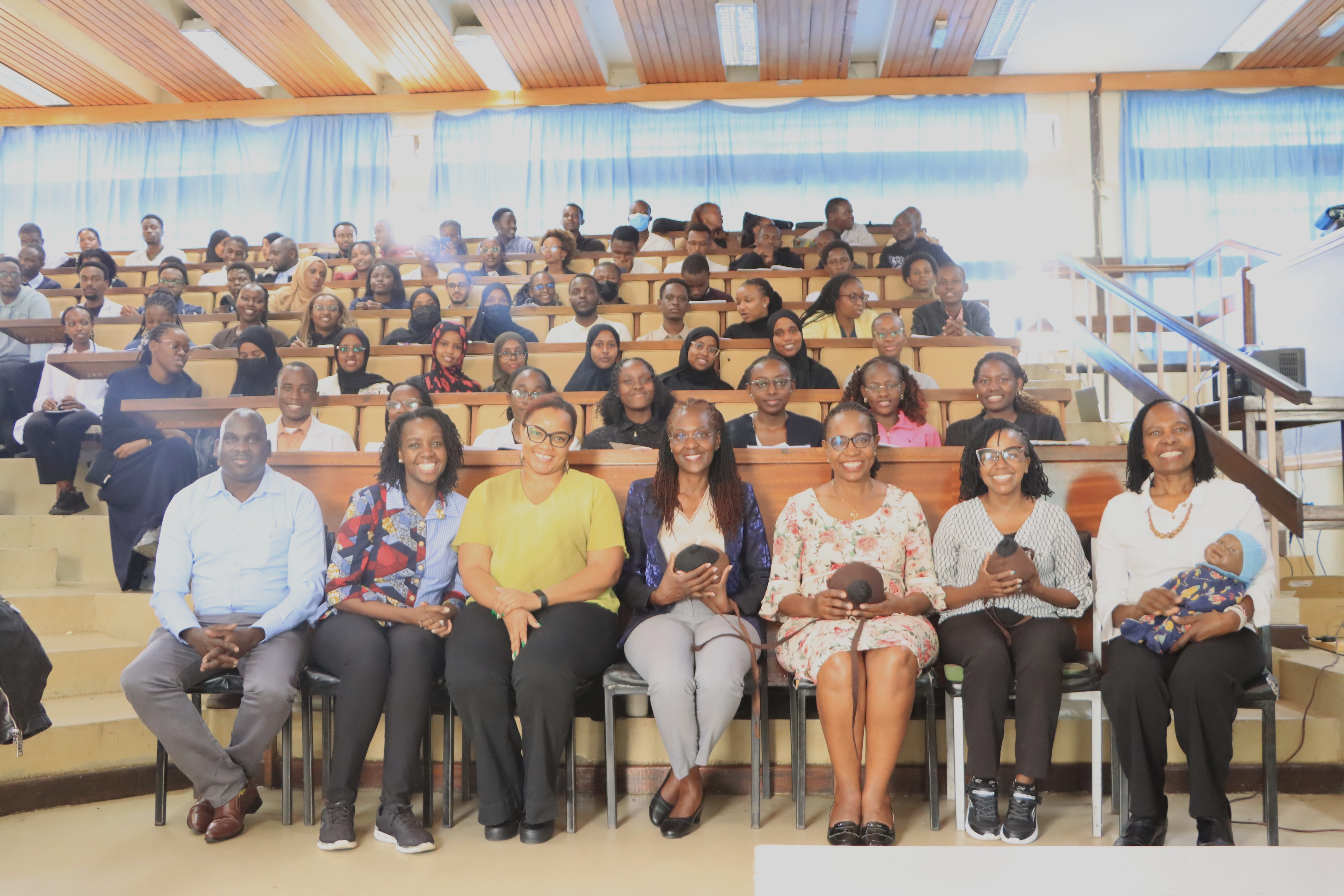
Associate Dean Undergraduate Studies Prof. Rose Kosgei with the speakers at the Breastfeeding bootcamp, Dr. Grace Irimu and students at the event.
A recent Breastfeeding bootcamp hosted by the Faculty of Health Sciences (FHS) and facilitated by seasoned speakers from the Kenya Association for Breastfeeding on the 26th June 2026, underscored the unparalleled importance of breast milk, highlighting its importance over alternatives and the benefits it offers to both infants and mothers.
Experts and healthcare professionals passionately advocated for increased promotion of breastfeeding, emphasizing its critical role in infant survival and maternal health.
According to these experts, nutritionally it boosts infant development, promotes infant brain development, with studies suggesting it contributes to higher IQs and optimal overall growth. Breastmilk also has profound protective qualities; this protective effect is so recognized that even WHO guidelines for HIV-positive mothers were updated due to the milk's natural safeguards.
Speaking at the event Esther Kimani from the Kenya Association of Breastfeeding underscored the vital importance of exclusive breastfeeding for 6 months after birth for infants. According to her, statistics show that suboptimal breastfeeding practices contribute to 11.6% mortality rate in children under the age of five.
"Breastfeeding is one of the most powerful interventions when it comes to infant mortality," she stated.
In mothers, breastfeeding can slash the risk of breast cancer by a significant 20% annually. Another advantage of breastfeeding in mothers is that it aids in postpartum recovery by reducing excessive bleeding and assisting in shedding pregnancy weight. The hormonal exchange during breastfeeding also fosters maternal sensitivity, further enhancing a baby's cognitive development.
The session also delved into the critical issues in lactation, for example, it’s mechanisms and further into breastfeeding positions and milk expression by hand and machinery.
Proper nutrition during the period of lactation and pregnancy was also explored, where the presentations stressed the need for dietary diversity. Adequate nutrition in the right amount and time was linked to successful postpartum weight loss.
Beyond nutrition, the seminar tackled anemia prevention during pregnancy, emphasizing optimal dietary intake before and after pregnancy. Iron and folic acid supplementation were also highlighted as key strategies.
The Director of the Division of Nutrition and Dietetics from the Ministry of Health, Veronica Kirogo decried the threat of misinformation owing to advertisements and marketing gimmicks swaying women, especially working women to seek alternative feeding for example, formula for their babies.
“The greatest threat we have is misinformation. Mothers’ own milk is the best nutrition for the infant so why would you promote infant formula when a mother can breastfeed,” she stated in her address.
The event which was targeted at the faculty’s Fifth Year students to better equip them for life as medical practitioners challenged them to stay updated on the latest guidelines and policies so as to effectively support mothers and babies in future practice as health care practitioners.
Associate Dean Prof. Rose Kosgei proposed making this educational initiative an annual event for all fifth-year medical students.
“I propose that we make this an annual thing for all 5th years so that when they go out there, they will be the best doctors to support these women. Lactating mothers need our support,” she said in her address.
The bootcamp also saw staged demonstrations by the presenters to illustrate these fundamental points, segmented practical group demonstrations by the students were also done to facilitate learning.
The call to action, delivered by Dr. Grace Irimu, was clear and resonant to the students, "Be our champions to market breast milk," she concluded.
- Log in to post comments


